
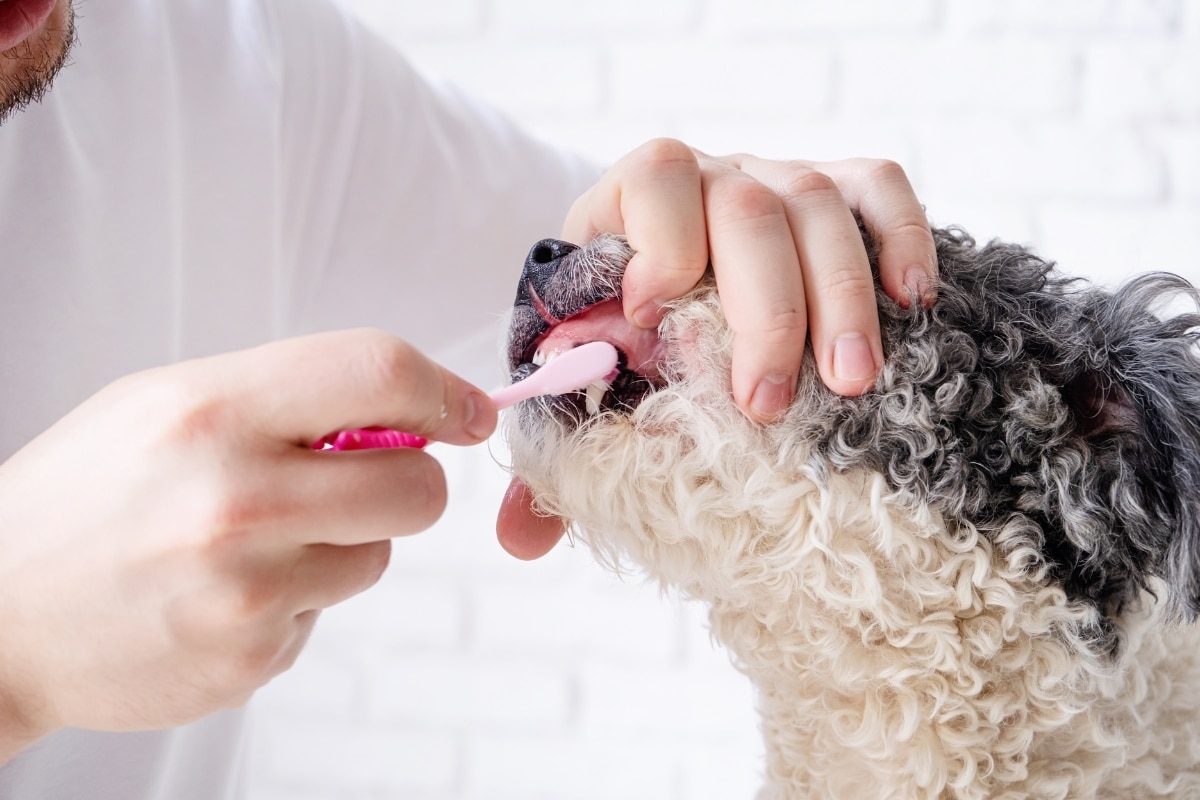
Your dog’s dental health affects much more than fresh breath. Plaque and tartar can accumulate along the gumline, leading to inflammation, discomfort, bad breath, and periodontal disease. Because dogs often hide signs of oral pain, dental problems may progress before an owner realizes something is wrong.
So, should you brush your dog’s teeth? Yes. Regular tooth brushing is one of the most effective ways to help control plaque at home. However, brushing works best as part of a broader dental-care routine that may also include veterinary examinations, professional cleanings, appropriate dental products, and monitoring for changes in your dog’s mouth.
For pet owners considering a pet dental service, understanding what daily brushing can and cannot accomplish makes it easier to build an effective routine and recognize when professional care is needed.
Why Is Brushing Your Dog’s Teeth Important?
Dogs develop plaque just as people do. Plaque is a sticky bacterial film that forms on teeth after eating. If it remains on the tooth surface, minerals in saliva can contribute to tartar formation.
Over time, plaque and tartar can irritate the gums. This may lead to gingivitis, which can progress to periodontal disease if left unmanaged.
Dental disease can contribute to:
- Bad breath
- Red or swollen gums
- Bleeding around the gumline
- Loose or damaged teeth
- Difficulty chewing
- Dropping food
- Excessive drooling
- Oral discomfort
- Changes in eating habits
In more advanced cases, infection and inflammation can affect tissues supporting the teeth. Therefore, regular home care is an important part of maintaining your dog’s oral health.
How Often Should You Brush Your Dog’s Teeth?
Ideally, brush your dog’s teeth every day.
Daily brushing helps remove plaque before it has enough time to harden into tartar. However, if daily brushing is not immediately realistic, brushing several times a week can still be a useful part of a dental-care routine.
Consistency matters more than trying to establish a perfect routine overnight.
If your dog has never had his teeth brushed, begin gradually. First, allow him to become comfortable with having his lips and mouth handled. Then introduce the toothpaste and toothbrush separately before attempting a complete brushing session.
For a detailed guide on timing and frequency, you can also read how often you should brush your dog’s teeth.
When Should You Start Brushing a Dog’s Teeth?
You can introduce dental care while your dog is still a puppy. Starting early can help make mouth handling a familiar part of everyday care.
However, adult and senior dogs can also learn to accept tooth brushing. The process may simply take more patience if they have never experienced it before.
Start with short, positive sessions. Reward your dog for calmly allowing you to touch his muzzle, lift his lip, or briefly touch his teeth.
Never force a toothbrush into your dog’s mouth if he is frightened or struggling. A gradual approach can help create a more positive association.
What Toothbrush Should You Use for a Dog?
Use a toothbrush specifically designed for dogs or another veterinarian-recommended dental brush.
Dog toothbrushes come in several forms, including:
- Long-handled brushes
- Small-headed brushes
- Finger brushes
- Soft-bristled brushes designed for pets
Choose a brush that fits comfortably in your hand and is appropriate for your dog’s mouth size.
A small dog may need a smaller brush head, while a larger dog may be more comfortable with a larger design. The goal is to reach the outer surfaces of the teeth without causing discomfort.
What Toothpaste Is Safe for Dogs?
Always use toothpaste formulated specifically for dogs.
Human toothpaste is not appropriate for dogs because some products contain ingredients that can be harmful when swallowed. Dogs generally cannot rinse and spit toothpaste out as people do, so products intended for humans should not be used unless a veterinarian specifically advises otherwise.
Pet toothpaste is often available in flavors designed to appeal to dogs. Choosing a flavor your dog enjoys may make brushing easier.
Do not substitute household ingredients or homemade dental products without veterinary guidance.
How to Brush Your Dog’s Teeth Step by Step
Once your dog is comfortable with mouth handling, you can begin brushing.
Step 1: Choose a Calm Time
Select a quiet period when your dog is relaxed. Avoid introducing brushing when your dog is already highly excited or distracted.
Step 2: Let Your Dog Taste the Toothpaste
Place a small amount of dog-safe toothpaste on your finger and allow your dog to taste it. This helps him become familiar with the flavor.
Step 3: Gently Lift the Lip
You do not need to force your dog’s mouth open. Lift the lip gently to expose the outer surfaces of the teeth.
Step 4: Start With a Few Teeth
Use gentle circular motions along the outside surfaces, particularly around the gumline. Begin with just a few teeth if your dog is new to brushing.
Step 5: Gradually Increase the Time
As your dog becomes more comfortable, gradually brush more teeth and extend the duration of each session.
Step 6: End on a Positive Note
Praise your dog and offer a reward after brushing. Keeping sessions calm and positive can make future brushing easier.
Do You Need to Brush the Inside of Your Dog’s Teeth?
The outer surfaces of a dog’s teeth are generally the most practical area to focus on during home brushing. A dog’s tongue naturally provides some cleaning action on certain inner surfaces.
Therefore, you do not need to struggle to force the mouth open to reach every surface.
Instead, prioritize gentle, consistent brushing around the outer teeth and gumline. If your dog resists brushing or you notice significant tartar, professional dental assessment may be more appropriate than attempting increasingly difficult home techniques.
Can Brushing Remove Existing Tartar?
Brushing is excellent for controlling plaque, but it is not a substitute for professional treatment when substantial tartar has already formed.
Once plaque mineralizes into hardened tartar, a toothbrush generally cannot simply remove it.
A veterinarian may recommend a professional dental cleaning when tartar accumulation, gum inflammation, periodontal disease, damaged teeth, or other oral concerns are present.
This distinction is important: home brushing helps prevent and slow plaque accumulation, while professional dental care addresses problems that brushing alone cannot correct.
Signs Your Dog May Need a Dental Examination
Even dogs that receive regular brushing can develop dental problems. Genetics, age, oral anatomy, diet, chewing habits, and previous dental disease can all influence oral health.
Schedule a veterinary dental evaluation if you notice:
- Persistent bad breath
- Red or bleeding gums
- Yellow or brown tartar
- Loose teeth
- Broken teeth
- Swelling around the mouth
- Difficulty chewing
- Dropping food
- Excessive drooling
- Pawing at the mouth
- Reluctance to eat
- Changes in normal behavior
A dog may continue eating normally despite significant dental discomfort, so a lack of obvious symptoms does not necessarily mean the mouth is healthy.
Can Dental Chews Replace Tooth Brushing?
Dental chews and other dental products can complement brushing, but they should not automatically be considered a replacement for regular tooth brushing.
Some products are designed to reduce plaque or tartar through mechanical action. However, their effectiveness varies, and not every chew is appropriate for every dog.
When selecting a dental product, consider:
- Your dog’s size
- Age
- Chewing habits
- Existing dental problems
- Risk of swallowing large pieces
- Veterinary recommendations
A veterinary team can help you determine which dental products make sense for your individual dog.
What About Dental Water Additives and Dental Diets?
Dental water additives, specially formulated diets, dental treats, and other products may provide additional support for oral hygiene.
However, these products should complement, not automatically replace, a comprehensive dental routine.
If brushing is difficult, discuss alternatives with your veterinarian. A combination of appropriate products and professional dental examinations may provide better long-term protection than relying on one product alone.
How Can You Make Tooth Brushing Easier?
Some dogs accept brushing immediately, while others need weeks of gradual training.
Try these strategies:
- Begin with short sessions.
- Use a dog-friendly toothpaste your pet enjoys.
- Brush at approximately the same time each day.
- Start with only a few teeth.
- Reward calm cooperation.
- Avoid chasing your dog with the toothbrush.
- Never force the mouth open.
- Stop if your dog shows significant distress.
- Gradually increase brushing time.
Most importantly, make the experience predictable and positive.
If your dog refuses the toothbrush completely, do not turn dental care into a daily struggle. Ask your veterinary team about other options and whether your dog needs a professional oral examination.
Why Regular Veterinary Dental Exams Still Matter
Home brushing is valuable, but it cannot replace veterinary dental examinations.
During an oral examination, a veterinarian can look for abnormalities that may not be visible during routine brushing. In some cases, dental X-rays are needed to evaluate structures below the gumline because significant disease can exist beneath apparently normal-looking teeth.
Professional dental procedures may also involve cleaning areas that cannot be adequately reached at home.
Regular examinations allow dental problems to be identified earlier and help your veterinarian create a preventive care plan based on your dog’s age, breed, dental history, and overall health.
When to Talk With a Veterinary Professional
Brushing your dog’s teeth is one of the simplest preventive steps you can take at home, but it works best alongside regular veterinary dental assessments. If you notice persistent bad breath, visible tartar, gum changes, chewing difficulty, or signs of oral discomfort, don’t wait for the problem to become more advanced.
Schedule your appointment with Animal Hospital of Dunedin to discuss your dog’s dental health, home-care routine, and whether a professional dental evaluation is appropriate.
So, should you brush your dog’s teeth? Absolutely. Regular brushing helps control plaque, supports healthier gums, and can become an important part of your dog’s lifelong preventive-care routine. However, brushing is not a complete substitute for veterinary examinations or professional dental treatment when disease or significant tartar is already present.
Start slowly, use products made specifically for dogs, reward cooperation, and focus on consistency rather than perfection. Most importantly, pay attention to changes in your dog’s breath, gums, teeth, eating habits, and behavior.
With a combination of daily home care and appropriate veterinary oversight, you can give your dog’s mouth a much better chance of staying healthy and comfortable.
Frequently Asked Questions:
Q1. Should I brush my dog’s teeth every day?
Ans: Ideally, yes. Daily brushing is one of the best ways to remove plaque before it hardens into tartar. If daily brushing is difficult, brushing several times per week can still provide useful plaque control. The key is to establish a consistent routine using dog-safe toothpaste and an appropriate toothbrush.
Q2. Can I use human toothpaste to brush my dog’s teeth?
Ans: No. Human toothpaste is not designed to be swallowed, while dogs typically swallow toothpaste during brushing. Some human products may contain ingredients that are unsafe for dogs. Use toothpaste specifically formulated for pets and follow your veterinarian’s recommendations for dental-care products.
Q3. What happens if I never brush my dog’s teeth?
Ans: Without regular plaque control, plaque can accumulate and harden into tartar. This can contribute to gingivitis and periodontal disease. Dogs may develop bad breath, painful gums, loose teeth, and difficulty chewing. Regular brushing, professional examinations, and appropriate dental care can help reduce these risks.
Q4. Can brushing remove tartar from my dog’s teeth?
Ans: Brushing can help remove plaque and slow the formation of additional tartar, but hardened tartar generally requires professional dental treatment. If your dog already has significant yellow or brown deposits, red gums, bad breath, or other oral changes, schedule a veterinary dental examination rather than trying to scrape the tartar off at home.
Q5. My dog hates having his teeth brushed. What should I do?
Ans: Introduce brushing gradually. Start by touching your dog’s muzzle, then gently lifting the lip, allowing him to taste dog-safe toothpaste, and eventually introducing the toothbrush. Keep early sessions brief and reward calm behavior. If your dog remains extremely resistant or distressed, ask your veterinarian about alternative dental-care strategies.
Q6. How do I know if my dog needs a professional dental cleaning?
Ans: Signs such as persistent bad breath, heavy tartar, red or bleeding gums, loose or broken teeth, difficulty chewing, excessive drooling, mouth swelling, or changes in eating behavior can indicate a need for professional evaluation. Even dogs without obvious symptoms benefit from routine oral examinations because some dental disease develops below the gumline.