

Proactive Care for Lifelong Wellness
When it comes to facilitating a preventative health program for pets, our team at Animal Hospital of Dunedin has done so for thousands of dogs and cats in our practice history. If you have any questions about your pet’s preventative care or vaccination needs, please feel free to reach out to us and we’ll be happy to help you.
Examinations
The frontrunner in time-proven veterinary medical practices is the recommendation for routine physical examinations. This is recommended for all pets; even pets that appear to be seemingly healthy at home!
Dogs and cats, like other animals, have the natural instinct to hide signs of illness, disease, and injury. This factor, in conjunction with a pet's inability to verbally tell us what hurts and where, can make assessing how they are really feeling a bit of a mystery to pet owners despite their best efforts. The medical team at Animal Hospital of Dunedin has years of collective experience and education in identifying subtle signs of concern in pets and the best way for us to do so is by visiting us for the recommended physical examinations.
At Animal Hospital of Dunedin, we recommend all pets under our care visit us at least once or twice a year, depending on age and health status. Puppies, kittens, sick pets, and senior pets require closer monitoring, and benefit from more frequent visits. The lifespan of pets is much shorter than ours, which is why it’s critical that we keep a scrupulous eye on changing health trends that may require our attention. The sooner we are able to identify an issue, the sooner we can address it!
During the physical examination, you can expect your veterinarian to assess your pet’s physical condition from nose-to-tail. This comprehensive assessment can tell us a lot of things, like if a young pet is growing as expected; if an adult pet has healthy skin and coat; and if a senior pet’s joints are aging comfortably – just to name a few.
If your veterinarian finds anything amiss, additional diagnostic tests may be recommended. The sooner we can make a diagnosis, the sooner we can help your pet feel better with the least expense to you. All of our professional recommendations are in the best interest of the pets and pet owners we care for.
In an effort to check up on your pet’s mental wellbeing too, we like to have a discussion with our clients about their pet’s behavior, temperament, and lifestyle. This is especially important information, because physical ailments can often manifest to cause mental wellbeing concerns too. You know your pet better than anyone else. We rely on you for this information! This discussion may include:
- How many hours per day is your pet home alone?
- Is your pet friendly towards other animals and people?
- Does your pet enjoy playtime?
- Does your pet have a comfortable place to sleep?
- Does your pet have any phobias and anxieties?
Have a conversation with your veterinarian about your pet’s health, behavior, and recommended care regime during your visit, especially if you have any questions or concerns. As your pet’s veterinarian, we are your best resource for pet health information and education, and we are always here to help you be the best pet parent to your pet family.
Pro-Pet-Parent Tip: Fecal exams are recommended annually, so bring a fresh stool sample with you to your visit. If we find any parasites in the sample, treatment options, as well as preventative measures, will be discussed in detail with you.

Vaccinations
There are countless pathogens in the environment that can put a pet’s health in danger. The solution is relatively simple: Keep up with the recommended vaccine schedule for your pet.
At Animal Hospital of Dunedin, our intention is to protect your pet against diseases that can cause their overall health to suffer, and in some cases be fatal. To do so, our medical team will craft a personalized vaccine schedule for your pet based on core vaccines that are recommended for all pets, and non-core vaccines that are recommended on a case-by-case basis.
Our vaccination protocol actively avoids over-vaccination in our patients. Like people, no two pets are exactly the same – why should their vaccine recommendations be? You can trust our medical team to only recommend the non-core vaccines that are absolutely necessary to prevent disease in your pet, based on their age, species, lifestyle, and health status.
Core vaccines are recommended for all pets.
Non-core vaccines are recommended on an individual basis, determined by lifestyle factors such as age, health status, and risk of exposure.
Vaccines in veterinary medicine work the same as they do in human medicine. Your pet will be exposed to a safe and carefully controlled level of the disease-causing pathogen, prompting the immune system to form protective antigens that will be ready to safeguard the body the next time it comes in contact with the disease in their everyday environment.
It’s important to note that keeping up with vaccines not only protects your individual pet, but it is also a courtesy to the rest of the pet community.
If you have any questions or concerns about the vaccines recommended for your pet, or if you’re unsure if your pet is up-to-date on his or her vaccines, we encourage you to give us a call or stop by during open office hours.
Parasite Control
Dunedin, Florida is home to an array of parasites such as fleas, ticks, mosquitoes, and intestinal parasites. In turn, this presents an array of health concerns for your pet, ranging from general discomfort to serious disease. In every single case we’ve seen, preventing parasites is simpler than treatment.
The medical team at Animal Hospital of Dunedin takes a two-step approach to parasite prevention.
- Continuous, year-round preventative medications>
- Parasite testing (annually)
Continuous, year-round preventative medications benefit your pet’s health and comfort, prevent the spread of parasites to other pets in the community, and safeguard your family from zoonotic infections too. It’s a win-win for all parties.
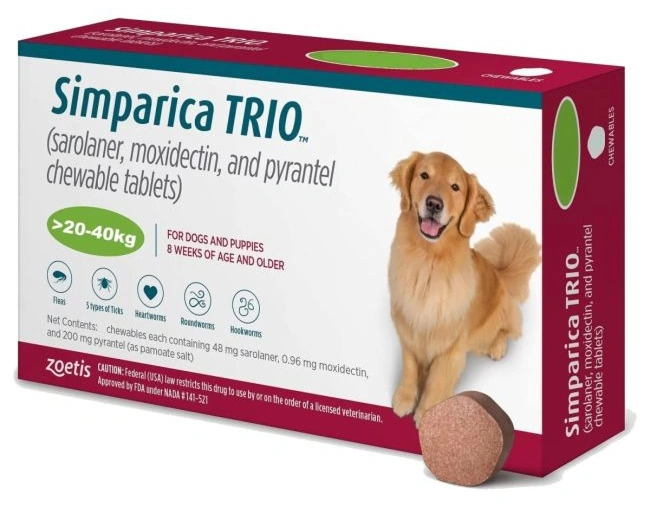
All pets are at risk of parasites without proper prevention, which is why it’s paramount that you maintain a steady parasite regimen year round. Our medical team will recommend preventative products that are effective for your pet and convenient for you. Preventative products come in the form of a pill, treat, topical or collar.
Parasite testing is recommended yearly, even if your pet appears to be parasite-free. Certain parasites are easy to spot, such as ticks on the skin. However, intestinal parasites are not as easily detected. To test for internal and external parasites, we will need to take a blood sample, and we ask that you drop off a fresh stool sample at your pet’s routine physical examinations.
Common Parasites in Pets
*Intestinal parasites can be passed from pets to people, and infection can range from mild skin irritation to serious illness. To keep your human family safe, wash your hands frequently after handling pets, wear gloves when picking up pet waste, and dispose of pet waste right away.
Microchipping
Our hope is that your pet stays safe with you for a lifetime. The unfortunate truth is that accidents happen to even the most conscientious pet owners, and approximately 10 million dogs and cats are lost or stolen every year. That’s a lot of furry family members!
As your pet’s trusted caretaker, there are a few methods of identification that will help to ensure your pet does not become part of this alarming statistic.
Microchips are the most reliable form of pet identification and most effective at helping lost pets return to their homes. Our professional recommendation is to insert a microchip in your pet sooner rather than later for your pet’s security and your peace of mind.
Insertion is quick and virtually painless, allowing us to perform the procedure at the same time as other services, such as the spay/neuter procedure or while administering vaccines.
Once your pet has been microchipped, the next step is to register your pet’s microchip to a national database complete with all your pertinent contact information. If you ever move or change phone numbers, make a note to update your pet’s microchip. Without your current contact information, you will be unable to be reached if your lost pet is found.
Collars and ID tags are also strongly encouraged. These forms of identification are not foolproof like microchips, however they are an added resource and signify to other people that your lost pet has a home and family.
Nutrition & Weight Management
Today, there are more overweight and obese pets than ever before. This upwards trend is causing serious health consequences and hindering quality of life in pets outside of the ideal weight ranges. At Animal Hospital of Dunedin, we are here to help protect your pet’s complete physical health and quality of life with professional recommendations for diet and exercise.
Weight gain does not happen overnight. It is a gradual process, which can make it tricky to notice in our furry family members. This is especially true for small dogs and cats, that can be seriously affected by just a few extra pounds.
Carrying too much weight day-to-day can lead to chronic inflammation, respiratory disorders, kidney dysfunction, liver disease, metabolic and endocrine disorders, high blood pressure, orthopedic issues, dermatitis, and cancer. All of this contributes to a poorer quality of life and lesser life expectancy.
If your pet is at an ideal body weight and body condition, that’s great! Maintaining a healthy weight throughout your pet’s life is entirely possible with proper diet and exercise.
If your pet could benefit from weight loss, you’ve come to the right place. The first step is to gather information from you, such as what your pet eats, how much they eat, and how often they exercise. Based on this information, we can recommend a nutrient-rich diet, proper food portion sizes, and regular physical activity that will promote weight loss.
Be patient with your pet as they embark on their weight loss journey. The recommended weight loss regime will take time, and we may need to update our recommendations along the way as we track your pet’s progress. Stick with it, as it will do wonders for your pet’s health and quality of life!