

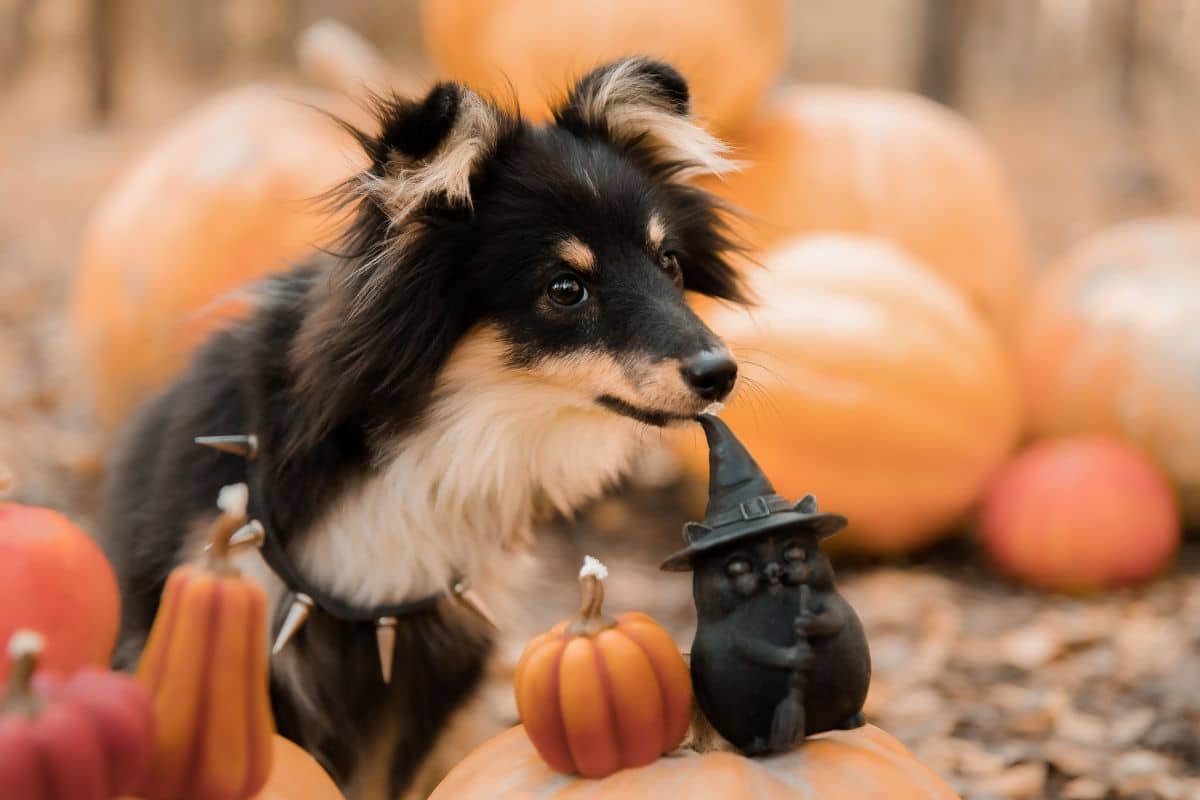
Halloween decorations can turn an ordinary home into something festive overnight. Stretchy cobwebs appear across porches, glowing decorations line walkways, and carved pumpkins light up front steps. For dogs and cats, however, these new objects are not simply decorations. They are unfamiliar things to sniff, paw at, chew, climb, or knock over.
Some Halloween decorations can cause injuries if pets become tangled in them. Others may lead to choking, digestive problems, burns, or electrical injuries. Even decorations that are considered low in toxicity can still create problems when chewed or swallowed.
Before decorating your home this Halloween, it is worth looking at each item from your pet’s point of view.
Why Halloween Decorations Can Be Risky for Pets
Dogs and cats explore their surroundings differently than people do. A puppy may investigate a plastic spider with its mouth. A cat may see a hanging decoration as a new toy. A wagging tail can knock over something that appeared safely positioned only minutes earlier.
Halloween also changes the normal household environment. Decorations may be placed in hallways, around doors, across furniture, or near areas where pets usually eat, sleep, and play.
The safest approach is simple: decorations should be difficult for pets to reach, chew, swallow, pull down, or become tangled in.
Are Fake Cobwebs Safe Around Dogs and Cats?
Stretchable artificial cobwebs are popular because they quickly create a spooky appearance. They are also one of the decorations worth reconsidering in a home with pets.
The thin, string-like material can get caught around a pet’s legs or body. Cats may be especially interested in batting, pulling, or chewing hanging strands. Long, stringy decorations can also become dangerous when swallowed because foreign material may cause digestive complications.
Veterinary guidance recommends keeping hanging decorations and artificial cobwebs away from pets because of potential entanglement, choking, and intestinal obstruction risks.
Safer Ways to Create a Cobweb Effect
You do not necessarily have to give up your Halloween theme. Instead of loose synthetic webbing, consider:
- Paper or cardboard Halloween decorations secured firmly to walls
- Solid decorative spiderweb shapes without loose strands
- Window decals placed beyond your pet’s reach
- Decorations displayed outside areas accessible to your pet
If you use artificial webbing, place it somewhere your dog or cat cannot reach, including from furniture or climbing surfaces.
What Happens If a Pet Chews a Glow Stick?
Glow sticks and glow bracelets are common on Halloween night, especially when families have children heading out after dark. The liquid inside a typical glow stick is considered low in toxicity, but that does not mean pets should chew one. Exposure can cause significant mouth irritation, unpleasant taste reactions, drooling, and sometimes vomiting. Broken plastic pieces can create an additional concern if swallowed.
Cats may be particularly interested in thin glow bracelets because their shape and movement resemble toys. If your pet bites into a glow stick, remove the item and prevent further exposure. If liquid is present on the fur, skin, or around the mouth, contact a reliable veterinarian in Dunedin for appropriate instructions. Veterinary advice is also important if you believe pieces of the plastic casing were swallowed. Do not leave glow sticks, bracelets, or necklaces on tables, floors, counters, or other places your pet can reach.
Candles and Jack-o’-Lanterns Need Extra Care
A glowing jack-o’-lantern looks great on Halloween night, but an open flame and an active pet are a risky combination. Cats may approach a flame because of its movement. Dogs can knock candles over with their noses, paws, or tails. A curious pet can suffer burns, and an overturned candle can ignite nearby decorations or household materials.
Battery-powered flameless candles are a safer choice for homes with pets. They can still create the flickering Halloween look without an exposed flame.
Remember that flameless does not mean chew-safe. Batteries and small plastic components should still remain inaccessible to pets.
Watch the Electrical Cords Behind Your Decorations
Animated ghosts, light-up pumpkins, string lights, and outdoor displays often come with electrical cords. Puppies, kittens, and pets that regularly chew objects may be attracted to these cords. Chewing a live electrical wire can cause injuries to the mouth and may expose the pet to electrical shock.
Arrange cords so pets cannot reach them. Avoid leaving loose wires running across floors or hanging from furniture. Inspect your Halloween display regularly because a decoration that starts securely attached can loosen after several days. If you notice damage to an electrical cord, unplug and replace the item rather than continuing to use it.
Small Decorative Pieces Can Become Foreign Objects
Plastic bats, miniature skeletons, eyeballs, rubber spiders, beads, and similar Halloween accessories may seem harmless. Their size is what can make them troublesome.
A pet does not have to intentionally eat a decoration to swallow it. A dog playing with a rubber spider may chew off part of it. A kitten chasing a small plastic accessory could accidentally ingest it.
Swallowed objects can sometimes become lodged in the digestive tract. Warning signs after suspected foreign-object ingestion can include vomiting, reduced appetite, abdominal discomfort, lethargy, or difficulty passing stool.
Contact a veterinary specialist if you know or suspect that your pet swallowed part of a decoration.
Are Decorative Pumpkins Safe for Pets?
Plain fresh pumpkin is generally not considered toxic to dogs or cats. A decorative pumpkin sitting outside for days, however, is different from plain pumpkin prepared as food.
Jack-o’-lanterns can soften, rot, or develop mold as they age. Pets should not be allowed to chew on old decorative pumpkins. Large pieces of rind may also create a digestive obstruction if swallowed.
Check porch pumpkins regularly, particularly in Florida’s warm and humid conditions. Discard them when they begin to deteriorate rather than waiting until after Halloween. If your pumpkin contains a candle, switch to a battery-operated light and keep the entire display away from curious pets.
Do Motion-Activated Decorations Frighten Pets?
Not every Halloween décor hazard involves something being swallowed. Motion-activated decorations can suddenly move, flash, scream, or make other loud sounds. A person knows that the skeleton near the door is supposed to move. Your dog or cat does not.
A frightened pet might run, hide, jump from furniture, scratch at a door, or attempt to escape. Pets already sensitive to unfamiliar sounds may find these decorations particularly stressful.
Test animated decorations while observing your pet from a safe distance. If your pet repeatedly hides, trembles, vocalizes, paces, or avoids the area, consider turning the decoration off or moving it elsewhere. Halloween décor should never require your pet to remain frightened in their own home.
Create a Decoration-Free Space for Your Pet
One of the easiest precautions is to keep at least one familiar part of your home unchanged. Choose a quiet room or comfortable area away from the front door and major decorations. Keep your pet’s bed, water, toys, and other familiar belongings there.
This can be especially useful on Halloween night. Repeated doorbell ringing, strangers in costumes, children outside, flashing lights, and unusual sounds can make the evening much busier than normal.
A secure indoor area also reduces the chance that your pet will slip through an open door while you are greeting trick-or-treaters.
A Quick Pet-Safety Check Before Halloween Night
Once your decorations are finished, walk through your home and yard before allowing your pet into the area.
Check whether your pet could:
- Reach artificial cobwebs or hanging strings
- Chew electrical cords
- Knock over candles or jack-o’-lanterns
- Reach glow sticks or glow jewelry
- Swallow small decorative pieces
- Pull decorations down from furniture
- Access batteries or broken plastic
- Eat old or deteriorating pumpkins
- Become frightened by motion-activated decorations
Do the same check from your pet’s height. Something that looks inaccessible while standing may be directly beside your dog’s nose or within jumping distance for your cat.
When Does a Halloween Décor Accident Need Veterinary Attention?
Some decoration-related incidents require more than home monitoring. Seek veterinary guidance promptly if your pet swallows string, fake cobweb material, plastic, batteries, or another foreign object. You should also contact a vet after an electrical injury, significant burn, or concerning exposure to the contents of a decoration.
Vomiting, breathing difficulty, weakness, severe drooling, repeated gagging, abdominal discomfort, loss of appetite, collapse, or unusual behavior should not be ignored after a suspected accident. If you are uncertain about the seriousness of an incident, contacting a veterinarian in Dunedin can help you determine the appropriate next step.
Keep the Scares in the Decorations, Not in Your Pet’s Health
A few thoughtful changes can make your Halloween display safer without taking away the fun. Keeping stringy decorations, glow products, open flames, electrical cords, and small objects away from pets can prevent an enjoyable night from becoming an unexpected medical problem.
If your dog or cat gets into Halloween décor or develops unusual symptoms afterward, Animal Hospital of Dunedin is here to help. Our veterinary team provides preventive care, diagnostic services, surgery, urgent care, and other veterinary services for pets in the community. We can evaluate unexpected health concerns, explain what may be happening, and recommend appropriate care based on your pet’s condition. If something does not seem right with your pet, call our team for guidance and veterinary care.
Frequently Asked Questions
Q1. Are fake Halloween cobwebs dangerous for cats?
Ans. They can be. Cats may become tangled in loose artificial webbing or chew and swallow strands. String-like material can create serious digestive problems when ingested. Keeping artificial cobwebs completely out of reach or choosing solid decorations is safer.
Q2. What should I do if my dog bites into a glow stick?
Ans. Remove the glow stick and prevent additional exposure. Glow-stick liquid can cause mouth irritation, drooling, and an upset stomach. Broken plastic may also present a swallowing risk. Contact your veterinarian if your dog has persistent symptoms or may have swallowed pieces of the glow stick.
Q3. Where can I take my pet after a Halloween décor accident in Dunedin?
Ans. If your pet has an unexpected health concern during normal business hours, contact Animal Hospital of Dunedin for guidance. The hospital handles urgent concerns and can advise whether your pet should be brought in or needs emergency care elsewhere. For potentially life-threatening symptoms, seek immediate emergency veterinary attention.
Q4. Can Animal Hospital of Dunedin check my pet after swallowing a Halloween decoration?
Ans. Yes. Animal Hospital of Dunedin provides veterinary examinations and diagnostic care that can help assess unexpected health concerns. Depending on what your pet swallowed and their symptoms, the veterinary team can determine what evaluation or treatment may be appropriate.
Q5. Should Dunedin pet owners call Animal Hospital of Dunedin if they are unsure whether a Halloween accident is urgent?
Ans. Yes. Animal Hospital of Dunedin advises pet owners to call when an emergency or urgent concern occurs so the team can provide guidance about the appropriate next step. Calling is particularly important when a pet has swallowed an object, suffered a burn, experienced an electrical injury, or developed sudden concerning symptoms.
Q6. Are battery-operated Halloween candles completely safe for pets?
Ans. They remove the burn and open-flame risks associated with traditional candles, making them a safer option. However, pets should not be allowed to chew them. Batteries, plastic pieces, and other small components can still be dangerous if swallowed.