


Gentle Care for Little Paws
There are few things more magical than bringing home a new puppy or kitten. Amidst all of the love and excitement, it’s important to begin good preventative care habits right from the beginning. Puppies and kittens require more frequent visits and specialized care tailored to their growing bodies and immature immune systems. Schedule a new pet visit with one of our veterinarians right away so we can help to give your pet the healthiest start to life.
Puppy Wellness Exams
- Puppy wellness exams are scheduled starting at 6 to 8 weeks of age and continuing every 3 to 4 weeks until vaccinations are completed. This properly timed schedule allows us to track your puppy’s growth, safeguard against illness, and prevent parasitic infections.
- You can expect your veterinarian to perform a comprehensive physical exam and administer any necessary core or non-core vaccines.
- This is an opportunity to ask us any questions you may have about your puppy’s physical health, behavior and training, temperament, and more.
- Please bring a fresh fecal sample to each of your pet’s scheduled wellness visits.

Puppy Vaccinations
- Vaccines shield your puppy from life-threatening conditions that can be especially detrimental to their growing bodies and weakened immune systems.
- Be conscious of where you take your puppy before they are fully vaccinated. Please, forego dog-friendly locations like dog parks, boarding facilities, and daycares until your dog is up-to-date on all their vaccines.
Core vaccines are recommended for all puppies, regardless of lifestyle considerations or health status. These include: Rabies, DA2P-P, and Leptospirosis.
Non-core vaccines are recommended on a case-by-case basis, determinant on lifestyle, risk of exposure, and health status. These include: Bordetella and Canine Influenza.
Click here to learn more about vaccines and how they keep your pet safe.
Kitten Wellness Exams
- Kitten wellness exams are scheduled starting at 6 to 8 weeks of age and continuing every 3 to 4 weeks until vaccinations are completed. This properly timed schedule allows us to track your kitten’s growth, safeguard against illness, and prevent parasitic infections.
- You can expect your veterinarian to perform a comprehensive physical exam, administer any necessary core or non-core vaccines, and test for concerns common in kittens.
- This is an opportunity to ask us any questions you may have about your kitten’s physical health, behavior and training, temperament, and more.
- Please bring a fresh fecal sample to each of your pet’s scheduled wellness visits.
Kitten Vaccinations
- Vaccines shield your kitten from life-threatening conditions that can be especially detrimental to their growing bodies and weakened immune systems.
- Keep your kitten safe at home until they are fully vaccinated.
Core vaccines are recommended for all kittens, regardless of lifestyle considerations or health status. These include: Rabies, Distemper, Rhinotracheitis, and Calcivirus.
Non-core vaccines are recommended on a case-by-case basis, determinant on lifestyle, risk of exposure, and health status. These include: Feline Leukemia.
Click here to learn more about vaccines and how they keep your pet safe.
Multi-Cat Households
- Feline Leukemia (FeLV) and Feline Immunodeficiency Virus (FIV) testing is strongly recommended for all kittens that will be living in a multi-cat household. Please, wait to introduce your kitten to other cats in your home until the test results are conclusive.
- Be patient when introducing a new kitten to other cats in your home. Cats are naturally territorial animals. So, for everyone’s safety, the introduction must be a slow process.
- Follow these steps for a smooth and safe introduction, and please do not rush the process!
- Keep your new kitten in a separate room of the house.
- Allow the cats to smell each other through the door, but do not allow them to see each other yet.
- After some time separated, put your new kitten in a carrier. Bring the carrier to a common room in the house and give your cats time to see and smell each other.
- Allow them to interact.
Don’t hesitate to give us a call if you have any questions or concerns.
Spay/Neuter Procedure
There are several preventative wellness services that are recommended for all patients we see. The spay/neuter procedure is one of these services.
Spaying is performed on female pets and neutering is performed on male pets. Both procedures refer to the surgical removal of the reproductive organs.
Our team of experienced doctors and trained veterinary technicians work together to make sure our patients are safe and comfortable with a successful surgical outcomes. We do so by following strict surgical protocols before, during, and after the procedure, including:
- Pre-Surgical Blood Panel
- Carefully Dosed Anesthesia
- IV Fluids
- Advanced Surgical Equipment
- Continuous Monitoring of Vitals
- Seamless Pain Management
In instances of responsible breeding, unique medical cases, or pets seven years of age or older, we understand that the spay/neuter procedure may not be the right choice for that particular pet. We encourage you to discuss your pet’s options and reproductive care with your veterinarian.
If you have any questions at all about the spay/neuter procedure, we encourage you to start a conversation with your veterinarian.
Why Should I Spay/Neuter My Pet?
The choice to spay or neuter your pet benefits your pet, you as a pet owner, and the local community as well.
- For pets, the spay/neuter procedure offers profound health benefits that will contribute to an improved quality of life and longer lifespan.
- For pets and pet owners, the spay/neuter procedure supports better behavior in pets – something all pet owners want!
- For the local community, the spay/neuter procedure helps to control the problem of pet overpopulation and supports local animal rescues who work so hard to help homeless pets get rescued, all with limited space and resources at the shelters.
Health & Behavioral Benefits of the Spay/Neuter Procedure
The spay/neuter procedure effectively prevents life-threatening diseases, corrects problem behaviors, and rules out unwanted litters. Ultimately, by ruling out breeding-instinct related behaviors, your pet will be happier at home with a temperament that is more affectionate, obedient, and loyal to your family.
Microchipping
Our hope is that your pet stays safe with you for a lifetime. The unfortunate truth is that accidents happen to even the most conscientious pet owners, and approximately 10 million dogs and cats are lost or stolen every year. That’s a lot of furry family members!
As your pet’s trusted caretaker, there are a few methods of identification that will help to ensure your pet does not become part of this alarming statistic.
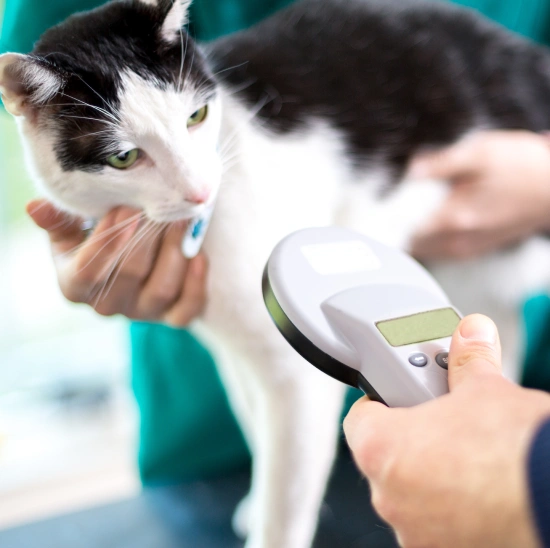
Microchips are the most reliable form of pet identification and most effective at helping lost pets return to their homes. Our professional recommendation is to insert a microchip in your pet sooner rather than later for your pet’s security and your peace of mind.
Insertion is quick and virtually painless, allowing us to perform the procedure at the same time as other services, such as the spay/neuter procedure or while administering vaccines.
Once your pet has been microchipped, the next step is to register your pet’s microchip to a national database complete with all your pertinent contact information. If you ever move or change phone numbers, make a note to update your pet’s microchip. Without your current contact information, you will be unable to be reached if your lost pet is found.
Collars and ID tags are also strongly encouraged. These forms of identification are not foolproof like microchips, however they are an added resource and signify to other people that your lost pet has a home and family.